Enter the Blog

This blog was created as part of my studies - MTeach (teacher librarian) -hopefully here you may find some musings on education, libraries, life and studying along with generally witty and insightful comments (if i can manage any!).

Please add comments along the way. I'll be glad for any input, especially from fellow students and library lovers

Kylie


Saturday, December 6, 2014

Amazing libraries


I came across this picture post and recommend a quick look - the beauty of these libraries is outstanding. If only we all had a great budget to work with!

EF137

http://www.slate.com/blogs/behold/2014/12/05/amazing_libraries_from_around_the_world_in_the_book_reflections_libraries.html

Tuesday, November 25, 2014

Study finished

The results are in and I will graduate in December!


students

http://www.theguardian.com/money/2011/aug/12/student-debt-to-rocket-2012-freshers

Thursday, October 30, 2014

New Job

Today I found out that I was successful in getting a teacher-librarian position at a local independent high school. I am over the moon.

I feel very lucky and excited to be taking on this new challenge and am looking forward to having the opportunity to put into practice all of the ideas learnt in my course. Thanks CSU!

Sunday, October 19, 2014

Last assignment finished


Finish Line
http://www.theintentionallife.com/finishing-strong/


I have finished my final assignment and now am only awaiting the results. Its a happy and surreal time and has been an absolutely crazy last few weeks! Now its just the results to come!

Monday, October 13, 2014

ETL 505 Critical Reflection

ETL 505 Information Resource Description - Critical Reflection 

On commencing this unit I had little knowledge of Resource Description and Access (RDA) and a limited understanding of subject heading and Dewey Decimal Classification (DDC) number construction.  Along with expanding my understanding of these and their relevance to teacher-librarians, this subject deepened my understanding of information resource description and the tools and systems employed to ensure effective information access. One important understanding gained was the interplay between resource description, standards and the application of subject classification schemes such as DDC and the fundamental way in which these must link to the user.

Svenonius (2000, p. 18) argues the aim of bibliographic systems is to find, collocate, chose, acquire or navigate information. This unit highlighted the way bibliographic systems rely on information being described and recorded to provide access to information and connected this with the role that standards and metadata play in facilitating user access.

The user as a central consideration to information resource description was further reinforced through exploring how the principles of Functional Requirements of Bibliographic Records (IFLA, 1998) apply to standards such as RDA. Likewise, examining the use of standardised vocabularies through developing subject headings according to School Cataloguing Information Services (SCIS) Standards (ESA, 2013), highlighted how the needs of school libraries influence this process.  A point further emphasised through examining the building of DDC numbers for resources and modifications applied by SCIS to suit the school library environment.

Along with user consideration, the application of information resource description standards was a recurring theme throughout the unit. Oliver (2010, p. 6) argues metadata standards ensure interoperability, resource sharing, and seamless metadata exchange highlighting how standards help provide structure to information organisation and access. Witten & Bainbridge (2010, p. 329) suggest standards such as name authority control and subject authority control improve user experiences thereby linking standards to users and emphasising the importance of metadata to library systems.
While metadata and vocabularies are currently fundamental to our library systems, consideration must be given to the impact of future and changing technologies. While content-based retrieval and social metadata have appeal, the primary role of school libraries is to support school curriculum and, as Mitchell (2013) suggests, school users have specific literacy and maturity considerations. As Hider, (2012, p.188) argues, metadata schema such as RDA and vocabularies provide structures that support collection navigation and information seeking in ways that content-based retrieval and folksonomies cannot.

This does not preclude these advances, but reinforces the need to consider the user and the information context. Perhaps of key importance to the school library is the user interface which links to the metadata underpinning it. Thus, customisation and smart searching along with the integration of features such as faceted navigation, hierarchical rankings or the inclusion of social metadata (Yang & Hoffman, 2010) can supplement traditional catalogues as additional layers.

This unit challenged and extended me while also allowing me to appreciate that quality resource description, the application of standards and consideration of the end user is central to information resource description and ultimately, effective information access and retrieval. It also highlighted that to maintain relevance, school libraries must consider their information context and modify the systems and tools they utilise to best serve the needs of their users in providing effective access to information.


References

American Library Association, Canadian Library Association, and CLIP: chartered Institute of Library and Information Professionals. (2010). RDA toolkit.  Retrieved 18 August, 2014 from Charles Sturt University website http://access.rdatoolkit.org.ezproxy.csu.edu.au/

Education Services Australia Ltd. (2013). SCIS Standards for cataloguing and data entry.

Hider, P. (2012). Information resource description: Creating and managing metadata. London: Facet publishing.

International Federation of Library Associations and Institutions (IFLA) (1998). Functional requirements for bibliographic records: Final report. Munich: K.G. Saur Verla. Retrieved 13 August, 2014 http://www.ifla.org/publications/functional-requirements-for-bibliographic-records

Mitchell, P. (2013) The future of the school library catalogue. In Connections (87). Retrieved 7 October 2014, from http://www2.curriculum.edu.au/scis/connections/issue_87/articles/the_future_of_the_school_library_catalogue.html

Online Computer Library Centre. (2011). WebDewey. Retrieved October, 2014 from http://dewey.org/webdewey/login/login.html

Oliver, C. (2010). Introducing RDA: A guide to the basics. Chicago: American Library Association. Retrieved Charles Sturt University website http://reader.eblib.com.ezproxy.csu.edu.au/(S(v0qmdssxqgrljvpntn1f132j))/Reader.aspx?p=675845&o=476&u=sa3s6x%2b4liO1HCmUZhGeKA%3d%3d&t=1408776351&h=5A5E92A424963CEE08267B9CC8F870B3D86CA36C&s=25775206&ut=1443&pg=21&r=img&c=-1&pat=n&cms=-1
Svenonius, E. (2000). The intellectual foundation of information organisation. Cambridge, Mass.: MIT Press

Witten, I.H, & Bainbridge, D. (2010). How to build a digital library. Burlington, MA: Morgan Kaufmann

Yang, S., & Hoffman, M. (2010). The next generation library catalog: A comparative study of the OPACs of Koha, Evergreen, and Voyager. In Information Technology and Libraries, September, 2010. Retrieved 9 October, 2014 http://ejournals.bc.edu/ojs/index.php/ital/article/viewFile/3139/2753

Saturday, October 4, 2014

Webdewey and Dewy Decimal Calssification

We have begun looking into Dewey Decimal Classification (DDC) and while I can appreciate the beauty of the hierarchical system and how clever it is - and if one knows how to the way in which you can decode the numbers to give you specific information ..... I have to say its a bugger of a thing to try and work out and pull apart!

I have read through some of the stuff but in the end did not do all the exercises but had a go at the previous example we had been provided but with mixed success.

My first usage of Webdewy wasn't great. I found it frustrating and difficult to use. But over time (and continual use) I have gained some understanding and the penny finally dropped when I worked out how to use the tables - and realised that you really need to read the notes!!

Onwards and upwards from here!

Monday, September 15, 2014

Assignment 1 back

Assignment 1 came back while on holidays and I confesses the heart was beating quite fast while opening. The assignment had been a challenging one and one unlike others (the RDA part) that I had done before.
Interestingly in the RDA section I did the best on the third resource which was the only one that I did not have a student example of. Some of the things I had altered due to the HD students work but what this taught me was to do it myself first and to trust my instincts (changing things at the last moment is never a good idea! And that these types of assignments are nearlly impossible to edit and check later without redoing so go slow and get it right first time.
However, on the whole it was a pretty interesting assignment and while I appreciate RDA I don't think i'll be rushing out looking for cataloguing jobs.

Friday, September 5, 2014

information


Gotta love it!


Dilbert by Scott Adams
http://brazilianjavaman.files.wordpress.com/2011/03/dilbertsoftwarerequirements1.jpg


Wednesday, August 27, 2014

RDA and assessment 1

The second part of our first assessment is the cataloguing of items using Resource Description and Access (RDA). It's an interesting process and has required some immersion in the RDA Toolkit. In the end I have found it useful to carefully go through each of the relevant sections and attempt to map them.

It's good to see how this works and the ways in which you approach resource description using RDA. Also interesting are the fundamentals behind it - which are addressed in the essay component. Its been a challenging assessment but quite a good one - hold on for updates once feedback returned.

Having said this though, as most library systems have the capacity to import data one wonders if there will ever be a need for such cataloguing in the average school library.

Tuesday, August 5, 2014

Professional Placement Reflection

As part of ETL507 I have been required to undertake a 10 day professional placement. I have just completed my 2 weeks in a large regional independent secondary school. I was able to do it here as I am not currently working in a school environment.

Reflection
The placement confirmed my desire to work in a school library and while on placement I was able to put into practice many of the ideas and skills learnt throughout the MEd course. It was exciting to be able to apply ideas, knowledge and skills in a school library setting and to have these affirmed and appreciated by an experienced teacher-librarian. It confirmed many of my ideas about the potential of the teacher-librarian role and the dynamic and friendly disposition required of an effective teacher-librarian. It also highlighted the need to be abreast of any and all technology utilised within the library and the challenges that problems with hardware and software can create and the need for the teacher-librarian to be responsive to these. In this respect it gave me a better understanding of the level of technical knowledge and support that librarians are often expected to be able to provide and the need to ensure that as a librarian you are aware of current trends in technology and hardware and software.

The opportunity to take part in the acquiring and processing of resources lead to not only a greater understanding of these aspects and the opportunity to discuss the impact of these processes and the need to ensure that the users’ needs are always at the forefront. This was a valuable reminder of this aspect of the role which sat well with those experiences gained on the study visit and the Functional Requirements for Bibliographic Records (FRBR) (IFLA, 1998) approach.

Along with gaining insight into the running of the library, I was able to see the way in which teachers perceive the library and the role of the teacher-librarian and how this impacts on the ability of the teacher-librarian to gain traction to collaborate and or co-develop resources. It was clear that the ability to perform this was reliant of the personalities of the teachers and the area in which they teach. This suggests the need for advocacy and the importance of librarians in providing professional development or ‘how I can help you’ sessions to raise awareness and increase collaborative opportunities.

The placement also highlighted the specialist knowledge that librarians possess in regards to resource and information provision and the management aspects of the library role. Having a non-trained teacher replacing the teacher-librarian demonstrated that this role is perhaps undervalued and misunderstood but again reinforced the need for teacher-librarians to be proactive. This clearly tied in many aspects of the MEd course in terms of being a leader, leading change and using research and policies as a way of being proactive in advocating the importance of the library and appropriately qualified staff.


REFERENCES

      International Federation of Library Associations and Institutions (IFLA) (1998). Functional requirements for bibliographic records: Final report. Munich: K.G. Saur Verla. 2014 

Thursday, July 24, 2014

Resource descriptions and the User

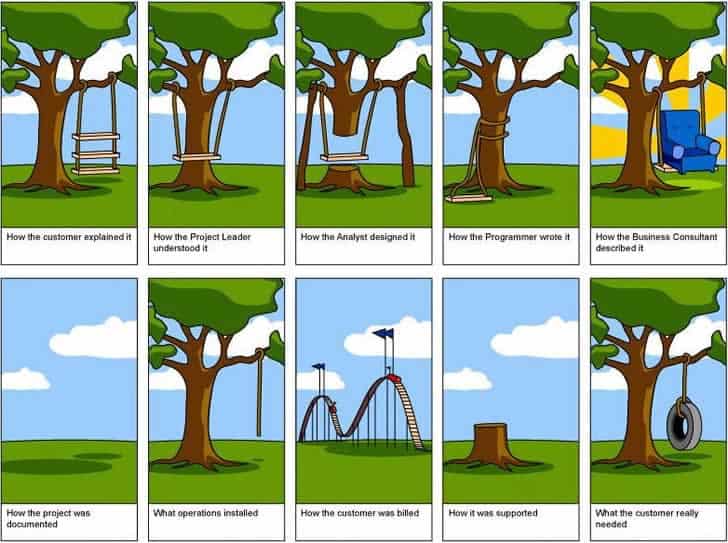
Its interesting that at the heart of any system that a library or any information organisation employs is the users themselves. This was driven home in the physical library sense while on the study visit and I can also see how this marries well with the idea of metadata creation  and the physical arrangement of information resources in a library. For what is the point of using a system to describe a resource is it doesn't apply the terms, values or records those attributes that the user will utilise in searching?

http://usabilitygeek.com/wp-content/uploads/2013/05/Requirements-Gathering-User-Experience-UX-Project-Cartoon.jpg


Wednesday, July 16, 2014

ETL 505

ETL 505

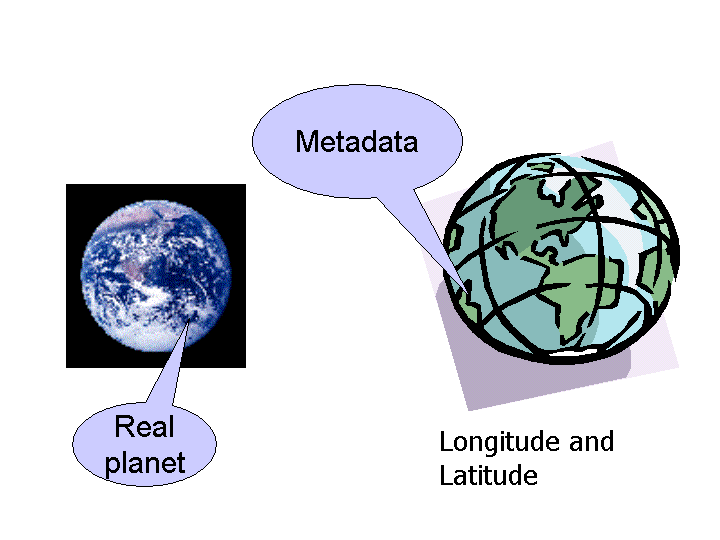
So begins ETL505 Information Resource Description. It sounds dry and difficult - I am wading through the text with its many terms and new vocabulary that I am trying to digest and wondering if I will get my head around things. Essentially though, information resource description is the metadata that one creates about an information resource that help users to find and access the resources they need to gain the knowledge they want.

I came across this image and thought that it quite aptly shows what I mean.


Metadata: http://www.kcoyle.net/img/meta_slide1.gif


Monday, July 14, 2014

Study visit summary

Lack of funding, staffing and space was a common theme as was a lack of time (along with funds) to complete tasks such as digitisation or updating catalogues and databases. The specific knowledge of the librarians as repositories of specialised knowledge including how to access information and resources (sometimes kept on disparate and very different systems within an organisation) was also evident at each library. In this way the librarians all had extensive understandings of their own collections and of their clients and users needs and habits.'


http://www.full-stop.net/wp-content/uploads/2013/01/amsterdam-books-bookstore-dutch-netherlands-photography-Favim.com-101302.jpeg


The visits highlighted the importance of being aware of and servicing the clients/users needs. These needs were also reflected in the different classification systems that were used (or created) in each library with many having inhouse systems or modifying DDC or LCC to allow greater depth to suit the collection

Changing technology and user habits were also a common theme particularly in terms of users wanting
and expecting quick and easy access to collections and information online – often this being more than
catalogue access but access to content as well. The need for digital asset management systems
was raised at several of the sites. There were very few, if any, systems in place that allowed all types of
collections at the one institution to be kept on one system – with some places having as many as 4 or more different databases in operation with no interoperability. Overall it was an interesting few days with each of the libraries offering different insights into library practice and the role of both libraries and librarians as a product of the organisation in which they resided.


Friday, July 11, 2014

Study visit Day 4

Sydney Institute of TAFE - Ultimo College Library


The main thing that impacted on me regarding the SIT library was the pro-activity of the staff in providing services and information across the TAFE and ensuring the library’s profile and place within the Institute was high and secure. This was reflected in the way in which the library asses its users needs and measures these against performance indicators and then adapts the spaces, practices and services to meet these needs or identified issues. The collection responds well to the diverse users needs in terms of subject content (related to courses offered) but also extends this to include opportunities to provide additional resources and materials for leisure activities, resources and spaces to ensure the library is well utilised and a central and important space within the TAFE.
The librarian gave a detailed and informative picture of the library services, users and needs along with giving insight into the bigger picture issues that impact on the library. It was inspiring to see a librarian who appears to be putting into place many of the ideas and practices covered throughout other units in the Med (TL), in particular issues pertaining to leadership, advocacy, resource provision and management, technology and flexible spaces and the way in which these related to their library.

Thursday, July 10, 2014

Study visit Day 3

Caroline Simpson Library - Sydney Living Museum
The Caroline Simpson Library & Research Collection in the Mint. Still from video. Image copyright HHT.

The Sydney Living Museum’s Caroline Simpson library was perhaps the best funded and staffed (in terms of ratio to institution staff numbers) of the cultural institutions visited. The $20 million Mint refurbishment provided the best space and atmosphere of any of these libraries. The collection is specific to Australian houses and gardens (and influences on) and is predominantly a reference library utilised by staff. The inclusion of 2 curators as well as library staff as part of the library raises the question of what constitutes a library and the how/why organisations group certain roles and materials together and how this differs across cultural institutions. One interesting aspect of the acquisition process is the active acquiring of missing titles in series and the notification by SLM members of potential items to acquire. It is also interesting to note that while the objects have a collection policy at this stage the library/traditional resources do not.
This was one of the few cultural institution libraries that had all their catalogue online. It provided a good contrast to the Australian Museum in the division of objects and older materials and newer references / acquisitions and how these were managed (including staff numbers and roles). It also provided a good counterpoint to the AGNSW library and the SLNSW in terms of collections/exhibition and digital future.


Society for Australian Genealogists


Geikie Grave. Image from Society for Australian Genealogists
http://www.sag.org.au/images/PRSlideShow/05-003326%20GEIKIE%20GRAVE.jpg

The SAG library has a very narrow focus and client base. The way in which the librarian has to adjust to this client base and their particular needs in terms of providing additional assistance with technology use highlighted the way the library must meet client needs in order to stay viable. The library uses its own classification scheme developed specifically for genealogical libraries which again reinforced the narrow purpose of the library but also showed how other schemes can make finding or retrieving information relevant to the information needs of the clients. As with other libraries, ongoing transfer of catalogues to a digital system is happening as is some digitisation of materials. One main point that arose from the visit was the impact of the popularisation of family history and the subsequent rise of large companies with online pay subscriptions and the impact of this on the library and the services it provides.
This was a really interesting example of a different way that the internet and digitisation can impact on libraries. In this instance the rise of online companies with large budgets has impacted on the library in profound ways in terms of not only what the collection holds and will continue to hold but also in terms of percieved value. It was also a great example of the librarian as technical leader and the need for the librarian to be across a large range of formats including microfilm and microfiche.

Wednesday, July 9, 2014

Study Visit Day 2


The Australian Museum
Research Library
http://australianmuseum.net.au/Uploads/Images/20951/scientific%20publications%20library%20records_big.jpg

The Australian Museum library reflects the Museum's collecting areas and it is interesting how its development and growth over time has impacted on the role of the library – this is particularly so in the sense that older manuscripts and works are used as working references. The continued use of card catalogues, the inhouse designed classification system along with the need to digitise these presented interesting insights into library practice and challenges.  The extent of the rare book collection impacts on the role of the librarians who fulfill some of the preservation aspects of the collection along with regular duties. Although open to the public the libraries main focus was servicing the staff of the Museum and as such the acquisition of titles is driven by the users. Space, staffing and budget suggest that the library is under resourced for the scope of the job - a common theme in the cultural sector at the moment. I loved the stuffed bird and animal collection that made up part of the library collection 


The Art Gallery of NSW

The AGNSW library (once found) reflects the broader organisation and its goals .... namely Australian art. It was initially designed as a professional resource for staff but is now open to the public and utilised by arts students and commercial art market users (and those suffering from Museum fatigue). The visual arts focus mirrors the art collection and the nature of art has seen the library continue with print publications rather than digital. The library also functions as an archive of artist related materials including ephemera (not available to the public) which impacts on the roles of the librarians and sees the library placed in the curatorial and conservation department. Although digitising collections is desired, time and costs prevent much of this occurring. As trends in art have changed the collection of material and formats has altered requiring the library to provide different technology to access these materials and the development of a new room in which to view this material.

Tuesday, July 8, 2014

Study visit Day 1

My first library visit was to the State Library NSW (SLNSW) and in some ways it represents the pinnacle of libraries and of the the visits i'm to make over the next week and the only library that is a library in and of itself and not used to support the function of another organisation.

The library is impressive on many accounts, from the buildings (you can go on a virtual tour  if you haven't been there for a while) to the breadth of their collection which includes manuscripts, paintings and objects valued into the billions - with some of the best collection of early (European) Australian artifacts

New exhibition: Life Interrupted
Image: Life Interrupted. Exhibition at the SLNSW http://www.sl.nsw.gov.au/

Two things struck me based on the talks and visit. The change in focus to children and education and the digital excellence program. The focus on children is a clever one and has been echoed by other cultural institutions who recognise the importance of securing their futures through building their next generation of visitors and users and the financial gains that can be made from the education sector through visits.

The digital excellence program including the digitising of the collection to provide greater access - much of which is shared on TROVE. One of the highlights of this is the WWI diaries displayed in the Life Interrupted exhibition. I was also interested to see they have also developed an app Curio.  


SITE 2: ABC Library

http://www.abc.net.au/tours/ultimo/

The ABC library was a great contrast to the SLNSW and an example of a library that is there to service the function of the organisation - in this case broadcast. As a result the library's main role was to provide material to TV and radio including the cataloguing of images, sound and film footage (in lots of detail). The hours of the library are long every day of the year and often the librarians have to provide materials in very short time frames (hours). It was also interesting that there were many different cataloguing systems in use which necessitated excellent staff knowledge to operate efficiently and the use of a variety of different systems. The library seemed low on staff, time and budget - which made the fact they gave up 2 hours in a very busy work environment very laudable.

Friday, June 20, 2014

Digital citizenship and Yik Yak

Keeping on with the digital citizenship trend, I came across the article Teaching digital citizenship in a 'yakking' world  which again reinforces the absolute need to teach digital citizenship. It also emphases how the ethics of using social media can be thrown out the window when an app allows anonymous posting. Keys to safer schools has also written a special report about this app and some of the impact it has.

 Image: http://www.keystosaferschools.com/wp-content/uploads/2014/05/Yik-Yak_edited.jpg

Thursday, June 12, 2014

Library of the Year

Edmonton Public Library has won the 2014 Gale/LJ Library of the Year. This library is doing some interesting things and obviously engages with the community really effectively. Read all about the library and its programs in Library Journal. Its great to see that leadership and teamwork are credited with having made the library so successful.

ljx140602webLOY5b 2014 Gale/LJ Library of the Year: Edmonton Public Library, Transformed by Teamwork
LEARNING CURVES Top: The interior of the innovative and award-winning Jasper Place branch is a highlight of the system. Second row, l.-r.: Library assistant Beth Hallett helps a patron, while community librarian Mike Eaton (standing) offers computer assistance. Third row, l.-r.: Jasper Place offers activities for all ages, and an outdoor patio offers a peaceful place to read. Bottom l.: the library’s curving roof is a striking sight. Photos by Phil Chin/AP Images for Library Journal

Retrieved http://lj.libraryjournal.com/2014/06/awards/2014-galelj-library-of-the-year-edmonton-public-library-transformed-by-teamwork/

Monday, May 26, 2014

ETL523 Critical reflection

Wordle: dcdle

Completing the unit Digital Citizenship in Schools has changed my understanding and appreciation of the necessity to integrate technology into teaching practice and build well designed Digital Learning Environments (DLE) that are used in conjunction with explicit Digital Citizenship (DC) instruction.

DC is more complex, nuanced and broader than I envisaged at the commencement of this unit (blogpost March 3).  I now recognise that DC as almost an ethos aligned with character education (Hollandsworth, Dowdy & Donovan, 2011) and as such, is a way of behaving that should be brought to the forefront of digital users’ awareness. This focus is reflected in Lindsay and Davis’ (2012) enlightened digitalcitizenship model which resonated with me due to its holistic approach and focus on awareness and understanding.

I had not previously considered access as a fundamental component of DC or the ramifications lack of access and opportunity has on full participation in contemporary culture (see Jenkins et. al.). If we are to prevent digital divides (Schradie) including those based not just on access but confidence and media production, then providing opportunities becomes a key focus not just of DC but in teaching practice and DLEs.

My initial idea of DLEs was narrow - focusing on actual 'environments' or platforms rather than encompassing skills, tools, habits and responsibilities (blogpost March 14). The broader definition encompasses many more digital tools than I had considered while the inclusion of habits and responsibilities made the links to DC both apparent and necessary.

Whilst familiar with the idea of using technologies in learning, particularly in terms of pathfinders, wikis and blogs, I had not afforded consideration to social media such as Facebook or Twitter. An enhanced understanding of how these tools can be used in developing ones Personal Learning Network (PLN) has subsequently developed. This has resulted in an increased awareness of how tapping into social network habits can be integrated into learning opportunities both for me and my students.

One notion that struck a chord was the idea of a personal cyber infrastructure () in which we are the architects of our digital lives through creating, sharing, curating and building our PLNs and environments. This raises the idea of consciously designing our online identity and profile, as well as highlighting issues of safety, digital tattoos and identity (see Levine).
To develop this personal cyber infrastructure, we (and our students) must know how to operate in digital environments and collaborate, create and share in safe, effective and ethical ways (Richardson, 2008). That this is our responsibility as teachers is reinforced through Ohler’s  questioning if we consider our students to have two separate lives—a relatively digital free life at school and a digitally saturated life away from school?

DLEs provide opportunities to teach those capabilities necessary for work, study and play in a digital society and through thoughtful design can foster DC.  My personaldigital artifact consolidated many of these ideas and I now appreciate the interplay between knowledge of DC and digital tools and well conceptualised and designed DLEs that support project/inquiry/blended learning and the necessity for us to both model and learn alongside our students.

Modelling and leading DC sits well within the role of a Teacher-Librarian (TL). O’Connell (2012) argues that TLs must make use of personal learning environments, PLNs, personal web management tools, cloud computing and content curation – all of which relate to DC and building DLEs.
I was surprised by the extent to which DC in schools connected and reinforced many of the concepts explored in other TL units including information literacy/fluency, leadership, policy development and resource provision and curation.  Notions of intellectual property, copyright and creative commons are familiar to TLs and much literature concerning the role of the TL includes information literacy/fluency. The idea of social media literacy (Rheingold, 2010), digital literacy (Hague & Payton, 2010) or the encompassing ideas of meta-literacy and transliteracy (O’Connell, 2012) sit well with the TL role and along with many other aspects of DC and the design of DLEs  are reflected in the ASLA standards of professional excellence for TLs (2014).

This course has convinced me DC instruction should be an essential part of the TL role and that a full understanding of it, and its application to schools, should be a prerequisite for 21st Century TLs and teachers. It has only been through explicitly considering the breadth of awareness and behaviours that DC encompasses that I have gained a true appreciation of the key attributes it embraces and the necessity for this to be embedded in DLEs and learners’ approaches to using technology. 


References 
ASLA, Australian School Library Association (2004). Standards of professional excellence for teacher librarians. Retrieved May 25, 2014 http://www.asla.org.au/policy/standards.aspx
A Personal Cyberinfrastructure. Educause Review 44(5) 58–59. Retrieved 30 March, 2014 http://www.educause.edu/ero/article/personal-cyberinfrastructure

Hague, C., & Payton, S. (2010). Digital literacy across the curriculum [Handbook]. Retrieved April 7, 2014  

Hollandsworth, R., Dowdy, L., & Donovan, J. (2011). Digital citizenship in K-12: It takes a village. TechTrends 55(4) 37-47.

Jenkins, H., Clinton, K., Purushotma, R., Robison, A. J., & Weigel, M. (2006). Confronting the challenges of participatory culture: Media education for the 21st century [White paper]. Retrieved 4 April, 2014  http://digitallearning.macfound.org/atf/cf/%7B7E45C7E0-A3E0-4B89-AC9C-E807E1B0AE4E%7D/JENKINS_WHITE_PAPER.PDF

Lindsay, J., & Davis, V.A. (2013). Citizenship. In Flattening classrooms, engaging minds: move to global collaboration one step at a time. Boston: Pearson/Allyn and Bacon Publishers

Levine, A. (2012). We, our digital selves, and us.[youTube video]. Retrieved 25 May, 2014 http://www.youtube.com/watch?v=9ziS3mpjgvI

O’Connell, J. (2012) O’Connell, J. (2012). Learning without frontiers: School libraries and meta-literacy in action. ACCESS, March, 4-7.

Ohler, J. (2010). Digital Community, Digital Citizen Thousand Oaks, Calif.: Corwin Press

Rheingold, H.( 2010) . Attention and other 21st century social media literacies. Educause Review 45(5).
Richardson, W. (2008, December 3). World Without Walls: Learning Well with Others. Edutopia. Retrieved  14 April, 2014  http://www.edutopia.org/collaboration-age-technology-will-richardson. 

Schradie, J. (2013, April 26). 7 myths of the digital divide [Blog post]. Retrieved 14 April, 2014 http://thesocietypages.org/cyborgology/2013/04/26/7-myths-of-the-digital-divide/